1920s Men's Fashion Guide — Gatsby, Gangster, and Everyday Looks
The complete 1920s men's fashion guide — Gatsby suits, gangster looks, Peaky Blinders style, and casual Roaring Twenties outfits with real buying advice.
On this page
- How Did Men Look in the 1920s?
- 1920s Men's Fashion Gatsby — The White Linen Dream
- 1920s Men's Fashion Gangster — The Peaky Blinders Aesthetic
- What Type of Pants Did Men Wear in the 1920s?
- What Shirts Did Men Wear in the 1920s?
- 1920s Men's Fashion Casual
- Where to Buy 1920s Men's Fashion
- Did Men Have Beards in the 1920s?
- Final Thoughts
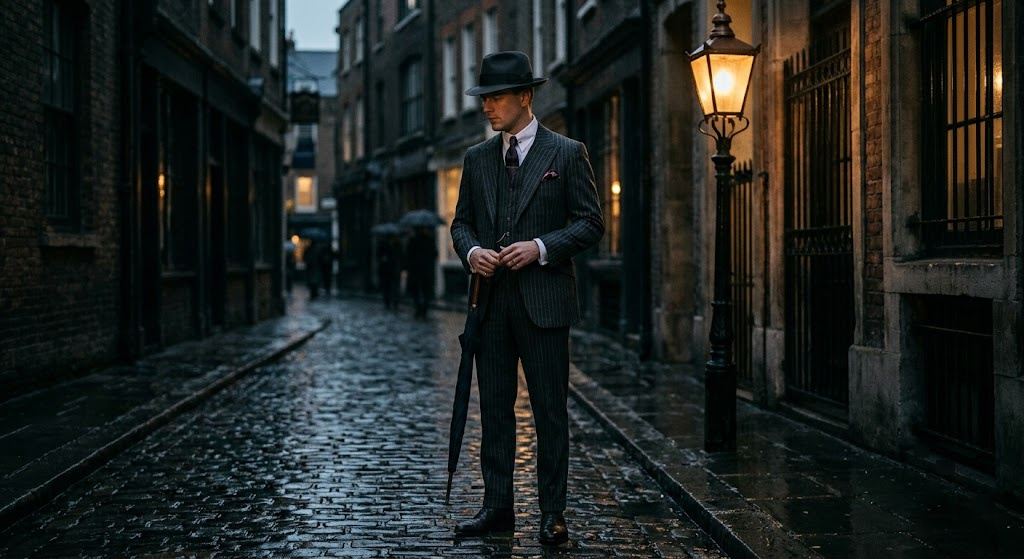
There's a photograph of my great-grandfather from around 1923 — a formal portrait, the kind you had taken once a year if you were doing reasonably well. He's wearing a three-piece suit in what I imagine was a charcoal or dark navy, a white shirt with a high collar, a silk tie held in place with a tie pin, and a pocket square folded into a perfect triangle. He looks — there's no other word for it — magnificent.
Men in the 1920s dressed with an intentionality we'd do well to recover. The Roaring Twenties are remembered for jazz, prohibition, and cultural upheaval — but the men's fashion of that era was genuinely extraordinary. Structured, precise, layered, and — in the right hands — genuinely beautiful.
Here's everything you need to know about 1920s men's fashion, whether you're attending a Gatsby-themed party, a Peaky Blinders night, or just fascinated by what "dressing well" looked like a century ago.
How Did Men Look in the 1920s?
The 1920s silhouette for men is characterized by structure, layering, and attention to proportion. Shoulders were natural and slightly padded. Trousers were high-waisted and wide-legged. Jackets had broad lapels, often with peaked rather than notched lapels for the most fashionable cuts. Everything was tailored — not aggressively fitted the way modern menswear can be, but precisely cut to a man's specific proportions.
Suits were the default daily attire for any man of even modest professional standing. Working-class men wore simpler versions — waistcoats with shirtsleeves and flat caps in labor settings, or a single suit for church and formal occasions. The more prosperous a man was, the more elaborate his suiting and the more visible his accessories.
The hat was not optional. A man in the 1920s without a hat was a man in an undressed state. The fedora and the homburg were the most formal choices. The flat cap (newsboy or ivy cap) was working-class and casual. The straw boater was for summer leisure. The top hat survived for formal evening occasions.

1920s Men's Fashion Gatsby — The White Linen Dream
The Great Gatsby aesthetic represents the pinnacle of 1920s men's fashion fantasy — the elite, the wealthy, the extravagant. Jay Gatsby's famous pink suit, Tom Buchanan's casual careless wealth in linen — these are fashion archetypes that remain recognizable a hundred years later.
For a Great Gatsby party as a male guest, the formula is:
A cream or white linen suit in a slightly broader cut than modern tailoring — double-breasted is particularly period-appropriate. A white dress shirt with a white or cream waistcoat. A pastel tie (pink, lavender, or light blue) or a silk cravat. A straw boater hat or a white fedora. White Oxford shoes or two-tone Oxford brogues.
The accessories seal the look: a pocket watch on a chain, a pearl or gold tie pin, white gloves if you're committed, and a silk pocket square in your breast pocket.
What colors represent Gatsby-era fashion? White, cream, gold, champagne, pink, pale lavender, and navy. The palette is deliberately glamorous without being garish.

1920s Men's Fashion Gangster — The Peaky Blinders Aesthetic
The gangster side of 1920s men's fashion is a completely different beast from the Gatsby world — darker, more physical, more working-class in its origins.
The Peaky Blinders aesthetic (inspired by the real Birmingham gang of that era) centers on:
A heavy tweed suit in herringbone or windowpane pattern — earth tones, greys, and browns rather than Gatsby's pastels. A flat cap (the newsboy or Bakerboy style) pulled forward at an angle. A collarless shirt or one with a small, close-set collar. Braces rather than a belt. Heavy leather boots or Oxford shoes.
The Peaky Blinders look is about physical confidence and controlled menace. It's less decorative than the Gatsby look but arguably more striking — the heaviness of the tweed, the working-class precision of the cap angle, the deliberate austerity.
What Type of Pants Did Men Wear in the 1920s?
Trousers in the 1920s were high-waisted — sitting at or above the natural waist rather than on the hip as modern trousers typically do. The leg was wide and straight, often with a turn-up (cuffed hem) at the bottom. Oxford bags — an extreme version of wide trousers that became fashionable among university students in the UK — represented the decade's most extreme trouser silhouette.
Oxford bags aside, the standard 1920s trouser was wide but controlled — not absurdly exaggerated, but noticeably fuller than anything we'd call "standard" in modern menswear.

What Shirts Did Men Wear in the 1920s?
Dress shirts in the 1920s were almost exclusively white — colored dress shirts were unusual and considered slightly louche in formal settings. The collar was detachable in many cases (a separate collar attached by collar studs), which allowed the shirt to be worn for multiple days while the collar itself was frequently laundered.
For casual settings, striped shirts in narrow stripes — often in fine cotton or Oxford cloth — were worn under waistcoats without jackets. Collarless shirts were working-class everyday wear.
1920s Men's Fashion Casual
Not every 1920s look needs to be a full three-piece suit. For casual daywear in the 1920s, a typical middle-class man might wear:
High-waisted wide-leg trousers in cream, grey, or brown, paired with a collarless or soft-collar striped shirt, braces, and a newsboy cap. For slightly more dressed-up casual, a tweed sports jacket over those same trousers with an Oxford shirt and a soft tie. Both looks are very achievable today with the right pieces.

Where to Buy 1920s Men's Fashion
For genuine vintage: estate sales, specialist vintage clothing dealers, and eBay vintage sections occasionally yield authentic 1920s pieces — though at collector prices and in varying condition.
For reproduction: companies like Gentleman's Emporium, RJ Toomey, and period-specific suit tailors can produce excellent 1920s-appropriate suits. For the Gatsby look specifically, cream linen suits are increasingly available through contemporary menswear brands in summer collections.
For the Peaky Blinders look: contemporary British brands like Walker Slater and Harris Tweed produce exactly the right tweed fabrics. Combine with a flat cap from Christys' or Failsworth and properly heavy brogues.
Did Men Have Beards in the 1920s?
Generally, no. The 1920s represented a period of clean-shaven dominance in men's grooming — the invention and commercial rollout of the safety razor made clean shaving accessible to ordinary men, and the clean-shaven face became associated with modernity, hygiene, and respectability. Moustaches existed (Charlie Chaplin's era, after all), but full beards had fallen decisively out of fashion by the time the 1920s arrived.
Final Thoughts
The 1920s was genuinely one of the great moments in men's fashion history — an era where the rules were clear, the execution was precise, and the results were unfailingly elegant. Recreating it doesn't require a huge budget. It requires understanding the silhouette, sourcing the right hat, and committing to the pocket square.
1920s mens fashion gatsby style is the most aspirational end of the decade — cream linen suits, silk ties, pocket watches, and a straw boater hat that says summer party at a Long Island estate.
1920s mens fashion gangster aesthetic is the darker, more working-class counterpoint to Gatsby glamour — heavy tweed, flat caps, braces, and boots that mean business.
1920s mens fashion peaky blinders has introduced an entirely new generation to the era's working-class style — and it's arguably more wearable in daily life than the full Gatsby white linen look.
For where to buy 1920s mens fashion pieces today: specialist vintage dealers, reproduction menswear companies like Gentleman's Emporium, and British brands producing genuine tweed and loden fabrics are all strong starting points.
Frequently asked questions
FAQ: 1920s Men's Fashion
What should men wear to a 1920s party? For a Gatsby-style party: a cream or charcoal three-piece suit, white dress shirt, silk tie, and a straw boater or fedora. For a Peaky Blinders-style event: a tweed suit, flat cap, collarless shirt, and braces.
What were the three trends of the 1920s? The three biggest menswear trends of the 1920s were: the wide-legged high-waisted trouser, the broad-lapeled double-breasted suit jacket, and the widespread adoption of the fedora as everyday hat.
What is the 3 color rule for men? The three-color rule in menswear suggests limiting your outfit to three colors maximum, with one dominant, one secondary, and one accent. In 1920s fashion, this typically meant a neutral suit color, white shirt, and a single tie color as the accent.
What not to wear to a 1920s party? Avoid: modern slim-cut suits (the silhouette is wrong), sneakers, skinny ties, shirts without collars that are simply open-necked modern shirts, and anything that reads as 1950s or 1940s rather than 1920s.