Dirndl Dress Guide — Traditional Styles, Pronunciation, and Styling Tips
Your complete guide to the dirndl dress — traditional styles for ladies and men, how to pronounce dirndl, which side to tie your apron, and 2026 styling ideas.
On this page
- What Is a Dirndl Dress?
- How Do I Pronounce Dirndl?
- Which Side Do You Tie a Dirndl?
- Do You Wear a Bra Under a Dirndl?
- Dirndl Dress for Ladies — Choosing the Right Style
- Dirndl Dress Style — The 2026 Direction
- Dirndl Dress Male — The Lederhosen Connection
- The Dirndl Controversy — What Is It?
- Final Thoughts
My first dirndl experience was at Oktoberfest in Munich — standing in a beer tent the size of a small stadium, surrounded by thousands of people in traditional Bavarian dress, feeling simultaneously completely out of place and weirdly at home. The dirndl I was wearing was a rental in forest green with a cream blouse underneath, and despite having absolutely no idea what I was doing, something about wearing it felt like participation in something genuinely alive.
That's the power of traditional dress. The dirndl isn't a costume. In Bavaria and Austria, it's a living fashion tradition — worn at festivals, celebrations, church occasions, and increasingly in contemporary everyday fashion contexts. Let me break down everything you need to know.
What Is a Dirndl Dress?
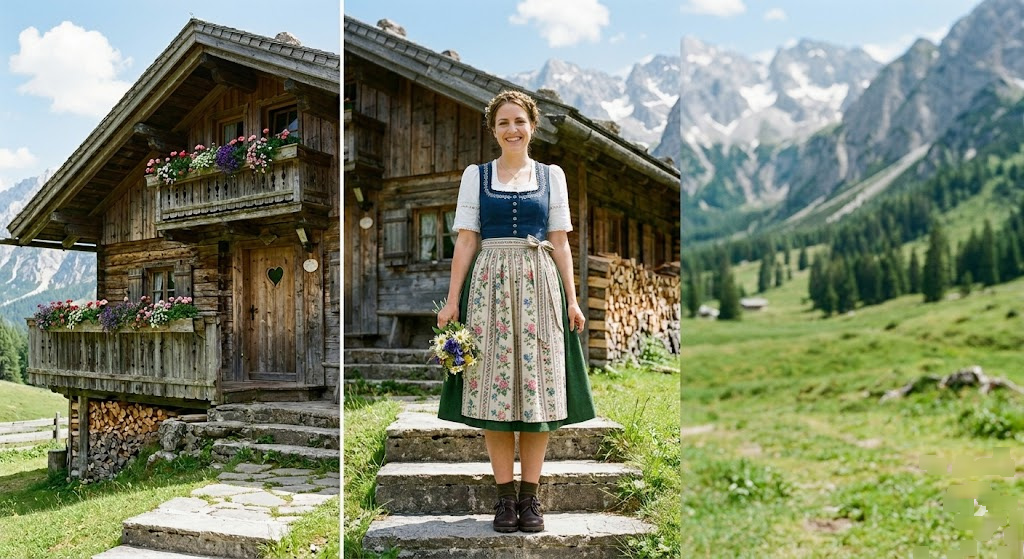
A dirndl is a traditional Alpine dress worn primarily in Bavaria (southern Germany) and Austria. The female version consists of four components: a fitted bodice (Mieder), a blouse worn underneath (Bluse), a full skirt (Rock), and an apron tied at the front (Schürze). The male equivalent of traditional Bavarian dress is the lederhosen.
The dirndl as we know it today was actually standardized in the 19th century, when romanticized Alpine folk traditions became fashionable among the European middle class. Before then, regional working dress varied considerably. The iconic Oktoberfest dirndl is actually a relatively modern interpretation of much older folk dress.
How Do I Pronounce Dirndl?
This is the question I get asked most often, and the honest answer is that it's difficult to represent in English spelling. The correct pronunciation is roughly DERN-dl — the first syllable rhymes with "stern" or "learn," and the second syllable is almost a soft, quick dl sound. It does not rhyme with "twirl" and it's definitely not "DIRN-dul."
In German, the r in Dirndl has that characteristic slight throat quality of German r pronunciation, which makes it harder for English speakers. DERN-dl is close enough that any native Bavarian or Austrian will understand you immediately.

Which Side Do You Tie a Dirndl?
Ah, the apron side question — the most famous piece of dirndl code. This is not a myth; it's a real social convention in Bavarian and Austrian festival culture:
Apron tied on the right side: taken (in a relationship or married). Apron tied on the left side: single and available. Apron tied at the back centre: widowed. Apron tied at the front centre: unclear — sometimes said to indicate "don't know yet" or simply worn incorrectly.
Is this enforced? No. Is it universally observed? Not anymore. But it's a fun piece of cultural knowledge, and tying on the left if you're single at Oktoberfest might genuinely generate conversation.
Do You Wear a Bra Under a Dirndl?
This is a practical question that deserves a direct answer. A well-fitted dirndl with a structured bodice provides significant support on its own — the boned or stiffened bodice acts much like a supportive corset. Many women wear the dirndl without a bra, particularly when the bodice fits very precisely.
If you prefer a bra, a strapless or low-back bra works best to avoid visible straps above the blouse neckline. The blouse (Dirndlbluse) is typically low-cut and sometimes off-shoulder, so visible bra straps interrupt the neckline significantly.

Dirndl Dress for Ladies — Choosing the Right Style
Dirndl dresses come in a range of skirt lengths that signal different levels of formality and occasion:
Mini dirndl (above the knee): a modern, playful interpretation, popular at casual events and in contemporary Alpine fashion. Not traditional, but very current.
Midi dirndl (below the knee to mid-calf): the most versatile and widely worn length. Appropriate for most Oktoberfest contexts, casual celebrations, and everyday Alpine festival wear.
Maxi dirndl (floor-length): the most formal and traditional. Appropriate for church occasions, formal Alpine celebrations, and Schützenfest (marksmen's festivals) where traditional dress codes are more strictly observed.
Color choices traditionally followed regional patterns — but in modern dirndl fashion, color is largely a matter of personal preference. Classic choices include forest green, navy, deep red, and black, typically with contrasting aprons in lighter or complementary shades.
Dirndl Dress Style — The 2026 Direction
Contemporary dirndl fashion in 2026 is doing interesting things. Designers like Lena Hoschek and Landbub&Lausmädel are creating dirndl styles that blur the line between traditional costume and genuine fashion — velvet bodices, silk aprons, unexpected color combinations.
The trend in fashion-forward dirndl for ladies right now: luxurious fabrics (velvet, silk taffeta, duchess satin) replacing the traditional linen or cotton, in sophisticated color pairings that feel more editorial than folk costume. A navy velvet bodice over a floral-print chiffon skirt with a cream silk apron is a 2026 dirndl that would work at a high-end fashion event.

Dirndl Dress Male — The Lederhosen Connection
The male equivalent of the dirndl is the lederhosen — leather breeches traditionally in short or knee-length, worn with a linen or cotton shirt (Trachtenhemd), suspenders (Hosenträger), and thick socks with leather shoes (Haferlschuhe). For more formal Alpine occasions, men wear the Trachtenjanker — a structured jacket in loden fabric.
At Oktoberfest and other Bavarian festivals, seeing a couple in coordinating dirndl and lederhosen is genuinely charming — and part of the visual culture of the event.

The Dirndl Controversy — What Is It?
The dirndl controversy you might have seen referenced relates primarily to debates about appropriation — specifically, when non-Bavarian or non-Austrian people wear traditional dirndl at events like Oktoberfest, and what that means culturally. The Bavarian perspective is generally that wearing traditional dress at traditional events is respectful participation, not appropriation — but quality and intent matter. Wearing a cheaply made "sexy dirndl" costume is viewed very differently from wearing a genuine dirndl with proper styling.
Final Thoughts
The dirndl is one of those garments that rewards wearing. It's more complex than it looks, more comfortable than you'd expect, and more culturally rich than any rental outfit at a tourist event might suggest.
If you're going to Oktoberfest: rent a quality one rather than a cheap Halloween-style version. If you're genuinely interested in dirndl fashion: invest in a proper piece, learn the apron code, and enjoy one of Europe's most beautifully preserved fashion traditions.
The classic dirndl dress female silhouette — fitted bodice, full skirt, white blouse underneath — hasn't changed dramatically in decades, and that consistency is exactly what makes it timeless rather than dated.
A dirndl dress traditional in the truest sense is made in Bavaria or Austria from regional fabrics — loden, linen, or cotton — with hand-embroidered apron detailing. These are the versions worth seeking out if you want the genuine article.
For those still wondering: dirndl dress pronunciation trips up nearly everyone outside of Germany. The correct way is DERN-dl — say "stern" and then add a quick, almost-silent dl. Say it enough times and it becomes natural.
Frequently asked questions
FAQ: Dirndl Dress
What is a dirndl dress? A dirndl is a traditional Alpine dress consisting of a fitted bodice, a full skirt, a blouse worn underneath, and a tied apron. It's traditional to Bavaria and Austria and primarily worn at festivals and celebrations.
How do I pronounce dirndl? Roughly DERN-dl — the first syllable rhymes with "stern" and the dl is a soft, almost-silent second syllable in German.
Which side is the dirndl tied? Right side = taken. Left side = single. Back = widowed. It's a cultural convention, not a strict rule.
Do you wear a bra under a dirndl? Many women don't — a well-fitted dirndl bodice provides its own support. If you prefer one, strapless works best.